


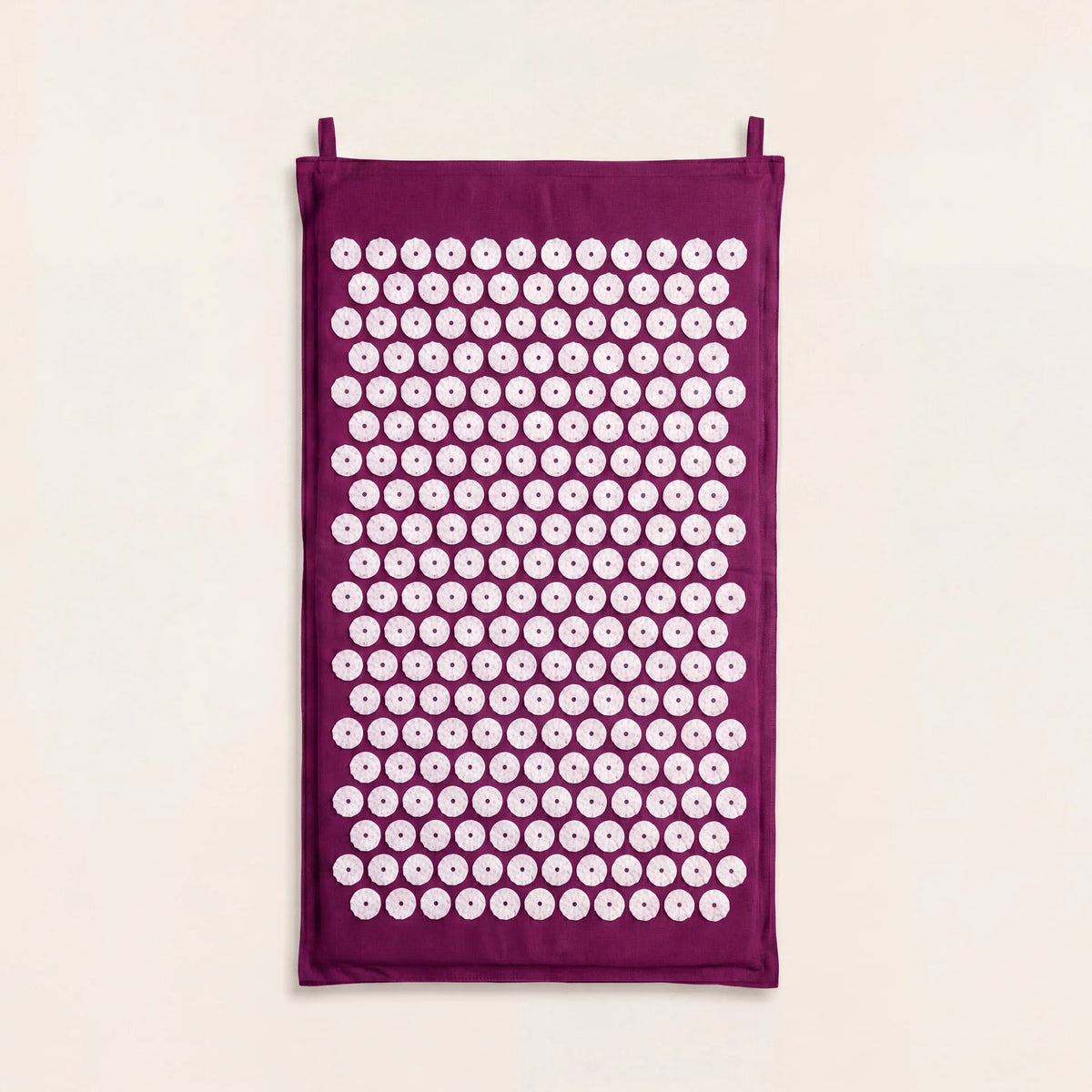
Acupuressure Mat
🎯 Reaches Your Deep Layered Fascia
🧘 Induces Immediate Stress Release
⏱️ 20 Minutes A Day Is All You Need
Only 6 Left In Stock
Couldn't load pickup availability

- SHIPS FROM THE USA
- SECURE CHECKOUT
- PREMIUM-GRADE MATERIALS
Product Description
Product Description
Primal Standard is built on a practice modern recovery forgot: acupressure, refined over 5,000 years and engineered for daily use. Foam rollers and massage guns work the surface of your muscles. Thousands of stimulation points work deeper — into the fascia, the connective tissue web that decides how you move, how you recover, and how you feel. Twenty minutes a day. A wave of warmth, a wave of calm, and a body that finally lets go. Trusted by D1 and pro athletes, doctor recommended, and made from premium materials built to last — the standard recovery should have had all along.
Customer Service
Customer Service
Have any questions? Reach out to us 24/7 via email:
Support Email: primalstandard@gmail.com



AS SEEN ON


Hear From Real Customers Like You
-

"I need this in order to function"
I'm writing this after owning mine for years, and six years in it's still going strong. I could probably get a fresh one with a more powerful point pattern by now, but this one still works fabulously. At this point my body craves the release it gives. Every morning I wake and lay on it straight away. Bare back, pillow tucked under my feet, timer set for about 8 minutes, then I roll over and do the same on my stomach. It's completely replaced hitting snooze, and at night it's how I calm my body before bed, like clockwork now. The first few weeks were intense. Never unbearable, just a feeling you get used to, so power through and resist the urge to shift around. Eventually there's no discomfort at all and you look forward to it. One tip: you'll feel itchy when you get up, rub it, don't scratch it."
-

"A real instant pain reliever"
"I rarely ever leave reviews for anything I buy, so that should tell you how effective this thing is. I've tried everything, and this one fairly cheap item has done more for my lower back tightness than all of it combined. My biggest tip: lay on it without a shirt, you really do need direct contact to get the full effect. And yes, it's uncomfortable at first. I started out only able to manage about 5 minutes, and now I can lay on it comfortably for a full 30. The most uncomfortable part now is actually getting off the mat, but that feeling subsides within a minute. I'm on it every single day, either in the morning after a workout, or after work when I've been stuck sitting all day and my whole body feels seized up. It's worth every penny, and the thing lasts forever. Just get it."
-

"I’m shocked, it actually works."
"I'm a mom of multiple kids with a full time job, and I carry so much tension in my back, shoulders, and neck. I bought this out of pure desperation, just to find some way to finally unwind at the end of the day. I won't lie, the first 3 minutes are pretty rough. But then it starts to subside, and you get this incredible warm sensation that spreads slowly across your whole back. I've only used it two days so far, and I can already tell you I almost fell asleep both times. My body felt more relaxed than it has in longer than I can remember. I even offered it to my mother to try, and her back eased right up, now she wants a set of her own. So I'll be buying a second one. And for the record, I'm just a normal, busy mom, zero sponsorship, no freebies, nothing."


Reaches Your Fascia
Stimulates the deep connective tissue foam rolling and massage guns leave untouched. Thousands of acupressure points press into the fascia — the web that wraps every muscle and dictates how you move — releasing tension at the layer everything else skips over. That's why your whole body feels different when you step off.

Recovery Is The Work
20 minutes flat does what an hour of stretching can't — deep tension release on your own floor, every day. Recovery isn't what happens after the work; it is the work, and the bodies that last are the ones that treat it that way. Lay down, let the tension go, get up moving freer.

5,000 Years In The Making
An Eastern practice that outlasted every wellness trend — because it works. Acupressure has been refined for five millennia while every gadget and fad came and went. We didn't invent it; we engineered it for daily modern use.

Built To Outlast You
Studio-grade construction engineered for daily use — a ritual, not a one-time gimmick. Premium cotton and a firm, supportive base hold their shape through years of sessions, not weeks. Buy it once, use it every day, pass it down.
Real Answers To Real Questions.
Everything first-time buyers ask before checking out.
Does the mat actually hurt?
The first 2–3 minutes feel intense — that's normal as your body adjusts to the pressure. For most people the intensity eases into warmth within the first few minutes, and by minute 10 they've settled in. By the third session, most stop noticing the initial intensity.
If you're sensitive at first, start with a thin shirt on and work up to bare skin over a few sessions.
How long until I feel results?
It varies person to person. Many people report a calmer, looser feeling after the first few sessions, with morning stiffness easing over the first week or two of daily use. Longer-standing tightness tends to be where consistency over several weeks matters most.
This isn't a foam roller — it's a daily routine that builds over time. 20 minutes a day, most days, is what makes the difference.
How is this different from a foam roller or massage gun?
Foam rollers and massage guns work primarily on muscle. The mat applies pressure to the fascial layer — the connective tissue that wraps the muscles underneath. Tight fascia is often a factor in everyday stiffness and that "can't fully loosen up" feeling.
The mat also delivers 8,000+ contact points across the back, hips, and legs at the same time. A foam roller covers one area at a time. The mat covers the whole surface at once.
How long do I use it for?
20 minutes a day. That's it. Short enough to actually keep up, long enough to build week over week.
Common times: after a workout, before bed, or first thing in the morning. Most people find what works for them within the first week.
What's the mat made of?
Premium linen and cotton cover, high-density foam interior, and an ABS spike system tested for 5+ years of daily use. PVC-free and non-toxic.
I'm not an athlete — will this still work for me?
Yes. The mat is built for anyone who asks a lot of their body — nurses, teachers, parents, electricians, office workers with locked-up backs, and anyone on their feet all day.
You don't need to be an athlete to have fascia. You just need a body that's been through some stuff.
When does it ship and how fast does it arrive?
Every order ships from our California warehouse within 1–2 business days. Standard shipping ($7.99) arrives in 3–7 business days. Express ($14.99) arrives in 2–3 business days. Free standard shipping on orders over $100.
How do I care for the mat?
Wipe down with a damp cloth after use. Spot clean with mild soap and water if needed. Air dry. Don't machine wash or tumble dry. Tested to last 5+ years of daily use when cared for this way.
What People Notice Over Time
The pattern most regular users describe — from the first session to month three.
Twenty minutes. The first few minutes feel intense — that eases as your body adjusts to the pressure. By minute 10, most people settle in. Most step off the mat warmer and looser than they got on — the kind of release that's hard to get from stretching alone.
This is where people tend to notice morning stiffness easing — less reaching for the lower back getting out of bed. Many also describe sleeping more soundly. A common first sign: standing up from a chair feels easier than it used to.
With daily use through the first month, people often report longstanding hip and hamstring tightness starting to loosen. Some notice changes in how they move and stand. The idea is simple — as tight fascia releases, the body has less to work around.
By the three-month mark, people who stay consistent tend to describe a baseline shift — better range of motion, faster recovery between hard sessions, and a body that fights them less day to day. Consistency is the whole game: 20 minutes, most days.
Who The Mat Is For
Athletes, yoga and pilates regulars, anyone carrying everyday stress, and people who track their recovery — different routines, the same fascial layer underneath.
Practice, lift, sprint, repeat. The mat targets the fascial layer that foam rolling skims over — across the back, hips, hamstrings, and feet in one 20-minute session. Used by D1 football, basketball, and track athletes through their hardest seasons.
You already work the surface. The mat works the layer underneath — 20 minutes after class, applying pressure across the fascia your practice opens up. A complement to the mobility you're already building.
The stress that doesn't clock out — a body that stays braced, a mind that won't switch off, nights where you're tired but wired. The mat's pressure gives the body a way to downshift: 20 minutes to unclench and wind down. For a lot of people, it's the part of the day the body finally settles.
Sauna, cold plunge, sleep tracker, supplements — you've dialed in the stack. The mat targets the fascial layer the rest of it works around: 20 minutes of full-surface pressure most recovery tools don't cover.
5,000 Years Of Pressure Point Therapy. Engineered For The Modern Body.
Modern life stacks tension on the body — desk work, training, time on your feet, gravity. The mat applies pressure across the fascial layer where that tension tends to build, head to feet.
The back, hips, glutes, hamstrings, and feet take the load from sitting, lifting, running, and standing — and that's where tightness tends to settle. Stretching works the muscle. A foam roller covers one area at a time. The mat lays pressure across the whole zone at once, targeting the fascial layer underneath.
The mat delivers 8,000+ contact points across the back, glutes, hamstrings, and feet — all at once. Each spike applies focused pressure to the fascial layer beneath the skin. A foam roller works one zone at a time. A massage gun works one muscle. The mat covers the whole surface in a single session.
First few minutes: intense, as your body adjusts to the pressure. Mid-session: most people feel the intensity ease into warmth as the body settles. By the end: a looser, calmer, more rested feeling. Twenty minutes — short enough to do daily, long enough to feel. Consistency is what makes it compound.
Why Choose The Recovery Mat?
A foam roller covers the surface, one area at a time. A massage therapist runs $120 a session. A chiropractor adjusts the joints, not the fascia. The Recovery Mat is designed to apply pressure across the full fascial layer at home — $69.99 once.
| Primal Standard$69.99 once | Foam Roller$30 once | Massage Therapist$120/session | Chiropractor$75/visit | |
|---|---|---|---|---|
| Targets Full-Body Fascial Layer | Yes | Partial | Yes | No |
| Works Without Appointments | Yes | Yes | No | No |
| Targets Back + Hips + Hamstrings + Feet | Yes | Partial | Yes | No |
| Use Daily At Home | Yes | Yes | No | No |
| Zero Recurring Cost | Yes | Yes | No · $120/visit | No · $75/visit |
| Rooted In 5,000 Years Of Practice | Yes | No | Partial | No |
A massage runs $120 a session. The mat is $69.99, once.
Claim My Recovery Mat — $69.99What Regular Users Say.
"Within two weeks the chronic tightness I'd just accepted as normal was gone. This thing addresses something that everything else was missing."
"It's like a deep tissue release without paying $120 for a massage. I get off it and my whole body moves freer."
"My clients who use it consistently report better sleep, less tension, and deeper body awareness. The full-body release is something massage alone can't replicate."
"First night sleeping through without back pain in years. I'm 47. Took photos of myself standing straight."
"20 minutes after a 12 hour shift on the warehouse floor. Life. Changing."
"Nurse here. 12 hour shifts. This is the only thing my back doesn't fight me on."
"Hip flexors finally letting go after years of yoga. The mat does what asana couldn't."
"Brutal the first session. Worth every minute. Day 4 and I'm already a believer."
"Hurt the first time. Best decision I've made for my body in 10 years."
"Replaced my $200 massage gun. Sold it on Facebook Marketplace. No regrets."
"Bought one. Bought another for my dad. Buying a third for my brother. That's how good it is."
"Athletic trainer recommended it to me after years of foam rolling. Now I get why."
"Athletes in our gym all have one now. Started as a trend. Stayed because it works."
"Doctor said it's the closest thing to acupuncture at home. Can confirm."
"My chiropractor told me to buy one. Now I see her half as often."
"Sleep deeper. Wake up looser. Worth every penny. Buying one for my husband next."
"My foam roller's been collecting dust since this arrived. Not even kidding."
"Best $90 I've spent on my body. Period."